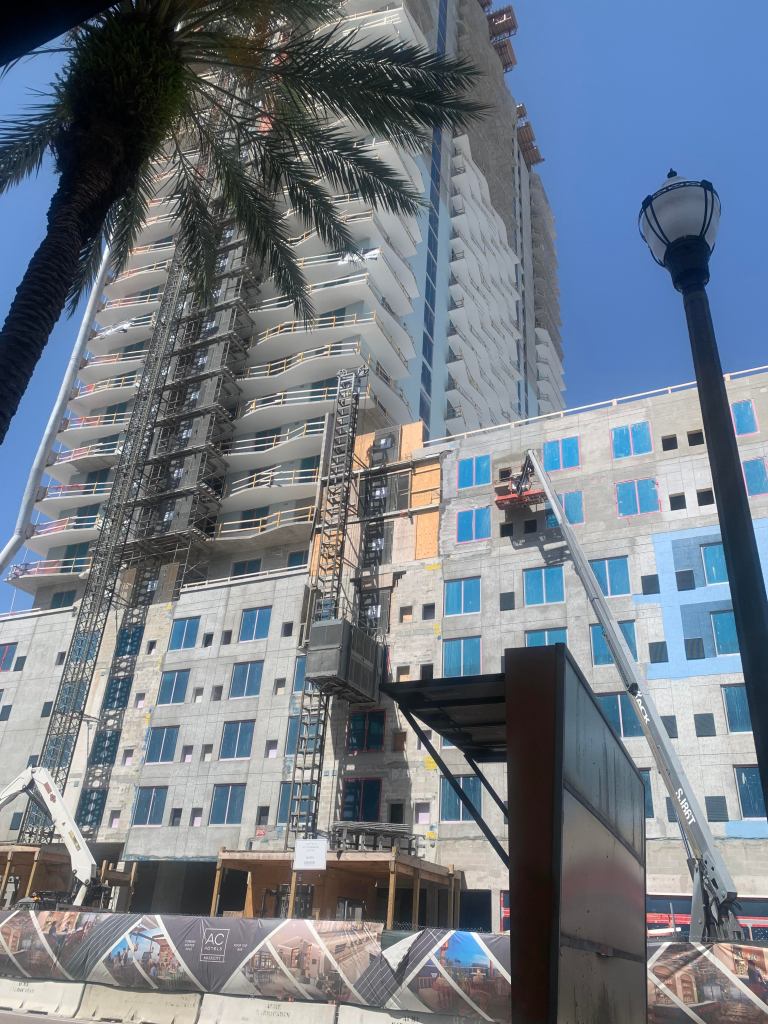
Over the span of the last two decades, St. Petersburg, and Tampa Bay as a whole, has been continually redeveloped and morphed in to the bustling cityscape seen today. Many neighborhoods that were previously less developed have been revitalized, making way for housing projects, new business openings, and a large degree of economic growth for the city at large. Neighborhoods like the Grand Central District, Central Avenue between the coastal bay and I 275, and parts of south St. Pete have been significantly changed in recent years.
While positive for prospective businesses and those with the capital to buy a home, these plans systematically fell short of engaging with lower income denizens of the city, and have left many locals frustrated at the rising cost of rent that has been seen as a part of the wider trend of city development. The cost of living throughout much of the county has risen, with a large degree of home rental prices rising at unprecedented levels.
Many locals spoken to expressed deep misgivings about their future in the region as they are beginning to be priced out of their homes and businesses. Countless commercial blocks of St. Petersburg have seen steep rent hikes, which has systemically hurt many preexisting businesses, causing some to move locations or close altogether.
St. Petersburg has been widely renowned for its artistic culture as an art and music heavy metropolitan region. In 2014, a portion of Kenwood was labeled an artist’s enclave, double zoning much of these neighborhoods so homeowners can run an art related business, such as a gallery, out of their homes. This initiative aided the cultivation of Kenwood as a critically acclaimed art district, even going as far to be ranked National “Neighborhood of the Year” Award by Neighborhoods, USA (NUSA); NUSA being a national non-profit organization which unifies several hundred neighborhoods from across the United States.
These development plans and awards have given the city a great deal of acclaim, and national attention has been called to the region, causing some to worry about the city’s further development and any subsequent heightened housing expenses that have already given many causes to be alarmed.
These rent hikes have affected both citizens and businesses alike, and as businesses close or relocate the culture of the city morphs in an unpredictable trajectory.
St. Petersburg has played host to a thriving local music scene, with shows both large and small rocking the city in a number of entertainment venues. The existence of this niche industry has been hit hard by the rent crisis, causing many businesses to close, like Fubar on St. Petersburg’s 600 Block. St. Pete’s Hideaway Café also has been facing imminent closure, with unaffordable rent being a main contributor. Even the legendary Jannus Live has been affected by the rent crisis, being saved by crowdsourcing techniques and community involvement.
In the end, this crisis is only towards the beginning of the heating up process, and much of what could be to come is yet to be written. Many businesses have already been affected, and a wide swath of St. Petersburg locals are feeling the burn in their hearts and their wallets. What will happen next has many locals worried, and as rent continues to rise and cost of living rises in tandem, many are overcome with uneasiness of what will happen to them if things become truly unaffordable.

 Saint Petersburg Forum For Rent Affordability